

High-performance RFID solutions
RFID is the quiet workhorse of modern operations. From dock doors to production lines and store stockrooms, RFID turns physical movement into clean, real-time data that businesses can trust.
What is RFID?
Radio Frequency Identification (RFID) is a family of technologies that use radio waves to read data from inexpensive tags, or labels, attached to items, assets, vehicles, or people. A typical system will include tags (or labels), readers, antennas, and specialist software that filters, validates, and routes events back to your business systems.
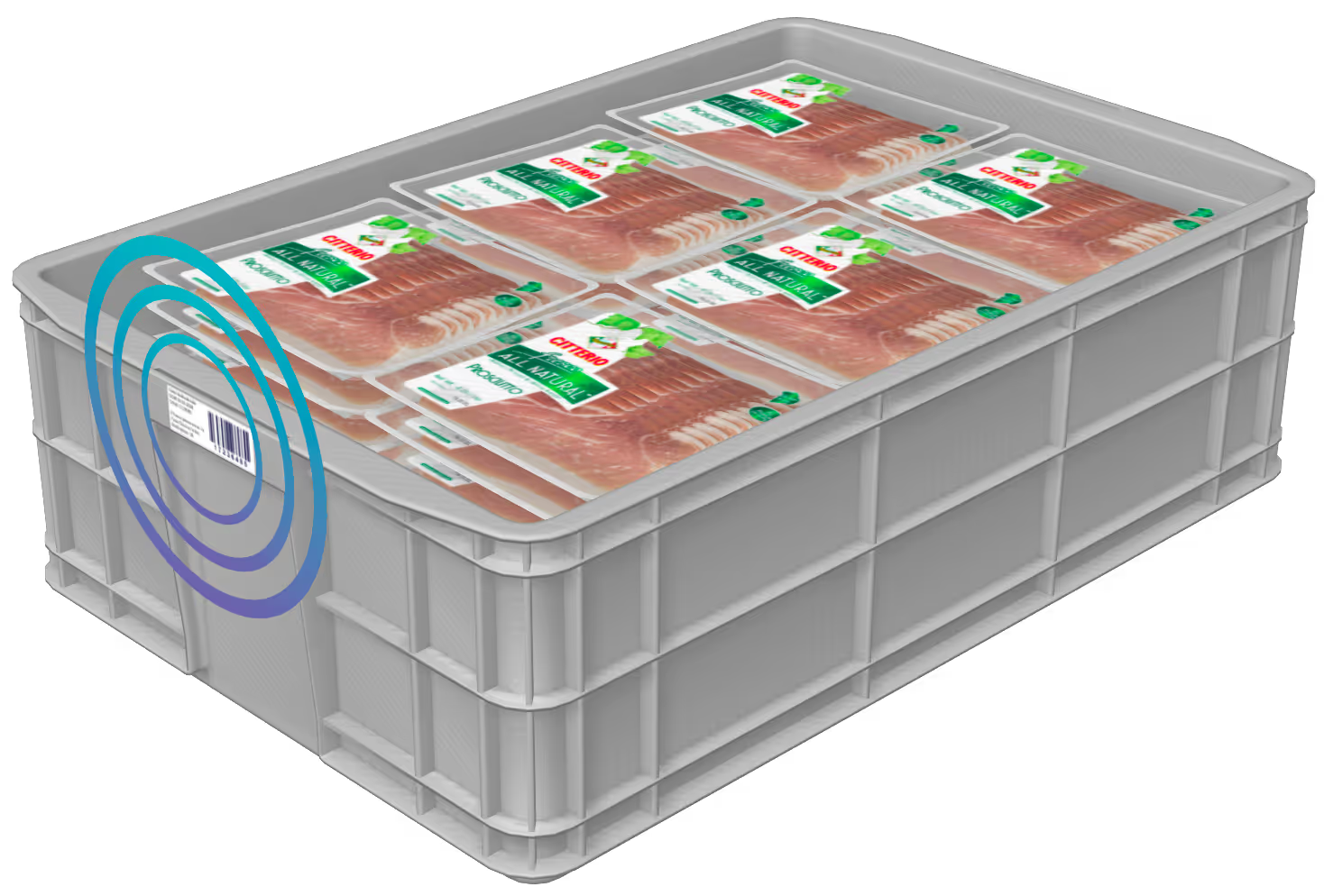
Unlike barcodes, RFID labels (which may still look like a regular label) do not require line of sight and can capture many items in a single read. In addition, each RFID label contains a small amount of onboard memory, allowing pertinent information to be held directly on the device. This is how modern, ‘smart’ passports hold your biometric data.
Why RFID is so effective for improving supply chains
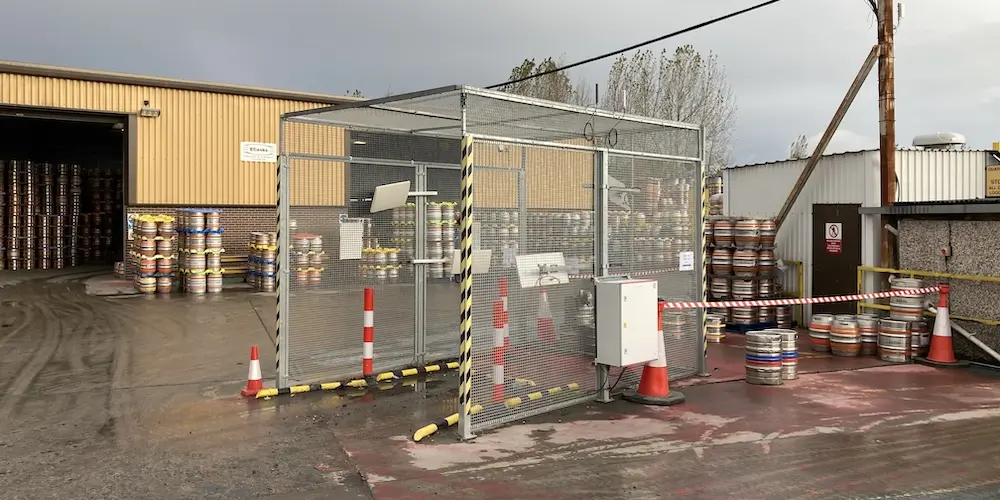
Supply chains suffer when data lags behind reality. Manual scans, missing barcodes and delayed updates cause stock inaccuracies, expediting and write-offs. RFID addresses timeliness and completeness issues by automatically capturing activity at the point of occurrence. Pallets flowing through dock doors are counted without stopping. Totes and stillages are read as they pass portals. Returnable assets report location on arrival. The result is live inventory and traceability without extra operator steps.
Because RFID uses globally adopted data standards and interoperable air interfaces, it scales across suppliers, facilities and partners. Serialised identities unlock item-level visibility, supporting targeted recalls, source-of-truth audits, and rapid investigations. With accurate movement history, planners can balance loads, eliminate safety stock, and shorten cycle counts to exception-only checks.
Finally, RFID closes the loop between the physical and digital. When events are normalised and integrated with WMS, TMS, MES or ERP, you get straight-through processing. That means fewer touches, faster turns and cleaner analytics for forecasting and continuous improvement.
Key benefits of RFID ...
Real-time stock accuracy
Item, case or pallet movements are captured automatically, so inventory is in near real-time and always reflects reality. This reduces out-of-stocks, prevents mis-ships in distribution, and enables just-in-time replenishment for production lines.
End-to-end traceability
Unique item identitifiers (Digital Product Passports) create a complete custody trail from supplier to customer. This enables targeted recalls, faster root-cause analysis, improved warranty handling, and easier compliance audits.
Faster receipt & dispatch
The speed, accuracy and long-range performance of RFID systems allows thousands of labels to be read as laiden pallets are moving through the supply chain. No stopping, and no manual scannign required.
Complete asset visibility
Pallets, totes, kegs and cages movements are recorded throughout the supply chain at various pre-defined points. This allows assets to be tracked and circulated around teh supply chain quicker than ever.
Industries we power ...
Wherever visibility, traceability, and control matter, we deliver impact.
Coriel Solutions partners with organisations across multiple sectors to solve complex track-and-trace challenges, from asset lifecycle management to live operational intelligence. While we highlight key industries where we have deep experience, our expertise is not limited to those industries. If your operation depends on knowing where assets are, how they move, and how they perform, we build the ecosystem to enable it.
Pharmaceutical supply chain
Returnable transport items
Food and beverage
Passenger & freight rail
Industrial manufacturing
Retail
Learn more by listening to our podcast...

The Podcast from Coriel Solutions
Now on season two, RFID Unlocked is a Podcast produced by the Coriel Solutions team, where we chat with customers, partners and industry specialists about everything RFID. Click the link below to listen to our previous episodes and subscribe to ensure you never miss the next!

RFID FAQs
What is RFID and how does it differ from barcodes?
RFID uses radio waves to identify items without line of sight and can read many at once, whereas barcodes require a visible label and a one-to-one scan.
Which RFID type is best for supply chains?
UHF passive RFID is typically preferred for logistics and manufacturing because it supports fast, bulk reads at portals and conveyors.
Can RFID work reliably around metal and liquids?
Yes, with the right on-metal tags, spacers, antenna placement and power settings. A site survey and tag-on-product testing are essential.
How accurate is RFID in real operations?
Well-engineered RFID solutions routinely achieve very high read rates, significantly exceeding those delviered by barcode and manual system.
Do RFID system integrate with my WMS or ERP?
Yes. Middleware normalises device data and posts clean events to existing transactions, keeping your current systems as the system of record. Coriel Solutions deploys the corielTHINGS platform to achieve this.
What about data privacy?
RFID tags/labels generally hold very little information other than a unique identifier – like an electronic barcode. Without access to the backend systems, this data ccannot generally be interpreted.
How do we measure ROI?
Return On Investment (ROI) savings typically come from increased accuracy, fewer mis-ships, reduced labour, lower safety stock, higher asset turns and faster access to accurate data.