

High-performance barcode solutions
Sophisticated barcode systems that deliver fast, reliable identification, with reading at high speed, over long distances, and can reliably detect labels with poor print, glare and motion blur.
What is a modern, high-speed barcode system?
A modern barcode system combines advanced imagers, optics and decoding software to capture both 1D and 2D symbols at speed with exceptional tolerance for real-world conditions. Coupled with sophisticated software, pre-processing is now able to remove dirt and noise, correct perspective, and even compensate for partially obscured symbols.
Although a barcode may often be a simple linear EAN, Code 128, or GS1-128 on a carton, many operations now deploy 2D symbols such as Data Matrix, QR, or PDF417 to pack more data into less space and to benefit from built-in error correction. With these advances, fixed scanners on conveyors, portals and lines can read multiple labels at once, across multiple faces, and all without slowing the supply chain operation.
Why barcodes are so effective in supply chains
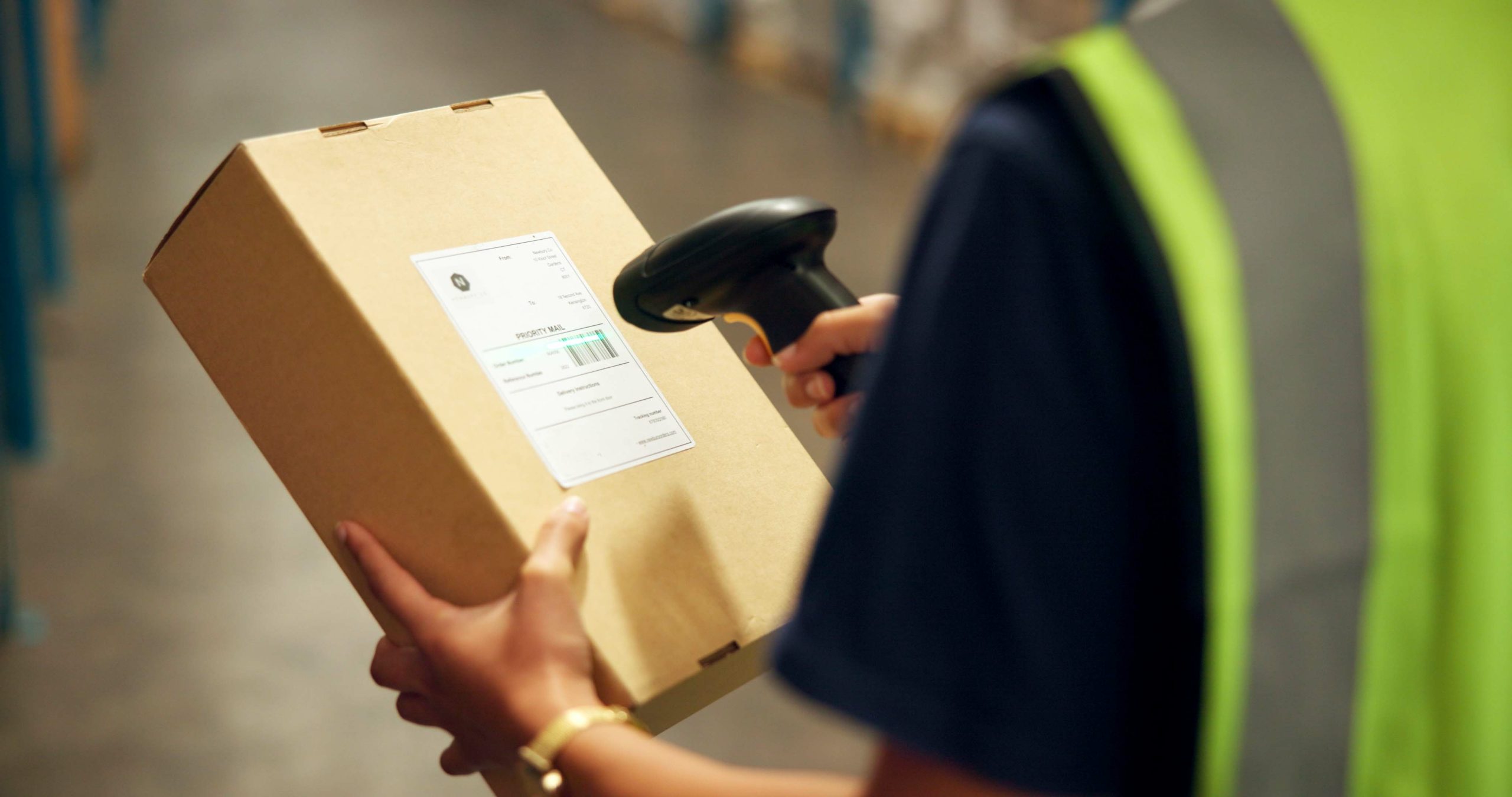
Supply chains move quickly, often in harsh environments. Barcodes remain the most cost-effective way to serialise and track items end-to-end because the labels are inexpensive, universally understood and printable at the point of pack. The latest readers remove the historic limitations associated with line-of-sight, narrow read windows and pristine print quality.
Long-range imaging means pallets, totes and parcels can be read from metres away as they pass through a gate or along a conveyor. Motion-tolerant decoders handle skew and vibration. Omnidirectional reading eliminates the need to present labels square-on. Where labels are scuffed, wrinkled or partly hidden by stretch wrap, error-correcting symbologies and smart algorithms recover the payload. The result is high read confidence at production speeds, fewer manual interventions and cleaner data for WMS, TMS and ERP.
Crucially, barcodes align with global standards, so what you print in the factory scans at the supply chain, from manufctaurer all th way to store. That consistency enables straight-through processing for receiving, put-away, picking and dispatch, and creates a reliable digital audit trail for every movement and handover.
Key benefits of barcode systems ...
Long-distance reading at speed
Modern, high-performance barcode solutions extend the working range so you can scan cases and pallets from several metres while operations run at full speed. This reduces stops, shortens dwell time, and supports automated tracking without slowing down the supply chain.
Decode damaged or obscured labels
Modern 2D codes include error correction, and readers apply de-blur, de-wrap and contrast enhancement to recover data from labels that are creased, low-contrast or partly hidden by shrink-wrap. Your team spends time on exceptions rather than rescans.
Higher first-time read rates and cleaner data
Omnidirectional reading and multi-code capture lift first-time read rates at doors, chutes and sorters. Clean events mean fewer no-reads, fewer manual key entries and a more accurate system of record for inventory and traceability.
Ready for harsh, real-world environments
Industrial imagers and controllers tolerate dust, vibration, temperature swings and bright ambient light. Polarised, high-output illumination cuts glare from metals and plastics. Enclosures and mounting kits simplify repeatable deployment across doors and lines.
Industries we power ...
Wherever visibility, traceability, and control matter, we deliver impact.
Coriel Solutions partners with organisations across multiple sectors to solve complex track-and-trace challenges, from asset lifecycle management to live operational intelligence. While we highlight key industries where we have deep experience, our expertise is not limited to those industries. If your operation depends on knowing where assets are, how they move, and how they perform, we build the ecosystem to enable it.
Pharmaceutical supply chain
Returnable transport items
Food and beverage
Passenger & freight rail
Industrial manufacturing
Retail
Learn more by listening to our podcast...

The Podcast from Coriel Solutions
Now on season two, RFID Unlocked is a Podcast produced by the Coriel Solutions team, where we chat with customers, partners and industry specialists about everything RFID. Click the link below to listen to our previous episodes and subscribe to ensure you never miss the next!

RFID FAQs
What is the practical read range for long-distance barcode systems?
With the right systems and lighting, case and pallet labels are routinely read from several metres away while moving. Exact range depends on label size, print quality, reflectivity and conveyor speed.
How do scanners decode damaged or obscured barcodes?
Image pre-processing boosts contrast and corrects skew, then decoders use error correction available in many 2D symbologies to reconstruct data even if modules are missing or the label is wrinkled.
Which codes are best for supply chain use?
Linear GS1-128 and EAN/UPC remain common on cases and items. Data Matrix, QR and PDF417 are used when you need more data in a smaller space or greater tolerance to damage.
Can we mix 1D and 2D in the same flow?
Yes. Most industrial imagers read multiple symbologies in the same frame, so you can support legacy cartons, supplier variation and new item-level initiatives side by side.
How fast can a line run and still read reliably?
High-speed imagers with global shutters and short exposure times capture crisp images at conveyor speeds typical of sorters and high-volume pack lines. The governing factors are module size, distance and illumination.
Do we need verification as well as scanning?
Yes. Verification checks print and mark quality against accepted grades so issues are caught at source. This protects downstream read rates and reduces manual rework.